Dec. 22, 2009




SPOKANE, Wash. (AP) - The Finch Arboretum is being overrun by ground squirrels, and Spokane Parks and Recreation is bringing in some special artillery.
The agency is using a special machine called the Rodenator Pro to detonate some of the estimated 100 to 150 squirrels tearing up the grounds.
The Rodenator Pro pumps propane and oxygen into the tunnels of squirrels, then sends an electric spark that causes an explosion. The shock waves kill the squirrels and collapse their tunnels - but in a humane way, the agency said.
The makers of Guinness are touting a new stout beer in the U.S., a maltier, fizzier version of its older, creamier sibling, the world's best-selling stout.
"This is more about refreshment and zing," said Guinness master brewer Fergal Murray, who created the new carbonated brew.
Visit msnbc.com for Breaking News, World News, and News about the Economy

Season dates for the 2009-2010 deer hunting season:
Archery – All zones: Oct. 1 to Feb. 28.
Modern Gun - Zones 1, 1A, 2, 3, 6, 6A, 7, 8, 8A, 10 and 11: Nov. 14-Dec. 6.
Muzzleloader - Zones 1, 1A, 2, 3, 4A, 5A, 6, 6A, 7, 8, 8A, 10, 11, 13, 14 and 15: Oct. 17-25 and Dec. 19-21.
The statewide Christmas holiday modern gun deer hunt is Dec. 26-28 with two special youth modern gun deer hunts.
TRENTON, N.J. (AP) — From March Madness brackets to Super Bowl pools to illicit back room wagers, people bet on professional sports games every day. But they can do it legally only in four states, and only two states currently offer state-sanctioned sports wagering.
With Atlantic City casinos in a financial free fall and New Jersey's budget in shambles, a state lawmaker filed a federal lawsuit Monday against the Justice Department that seeks to overturn a U.S. ban on sports betting. The casinos and their political allies say letting people bet legally on sporting events would let all 50 states in on a lucrative revenue source.
The news is dreadful: According to the Census, since 2006 we have been living in a republic where, for the first time in the history of the republic, Americans drink more bottled water than we drank beer.
Why is this important? It’s important because beer is a socially oriented beverage, and bottled water is a privately oriented one.
There’s a reason that beer commercials tend to include lots of people hanging out in a room together, and bottled water commercials tend to include lone individuals climbing things and running around by themselves, usually on a beach at sunrise - even though they are not being chased.
According to scientists, our mental abilities begin to decline from the age of 27 after reaching a peak at 22.
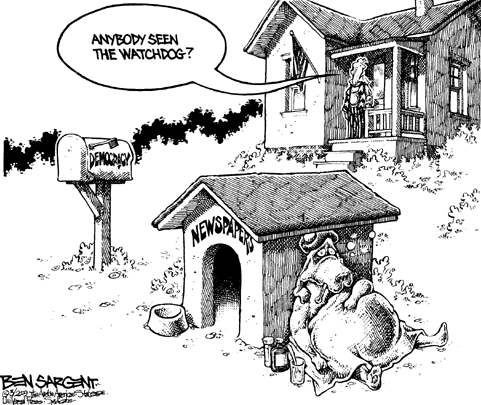
As many newspapers struggle to stay economically viable, fewer than half of Americans (43%) say that losing their local newspaper would hurt civic life in their community "a lot." Even fewer (33%) say they would personally miss reading the local newspaper a lot if it were no longer available.
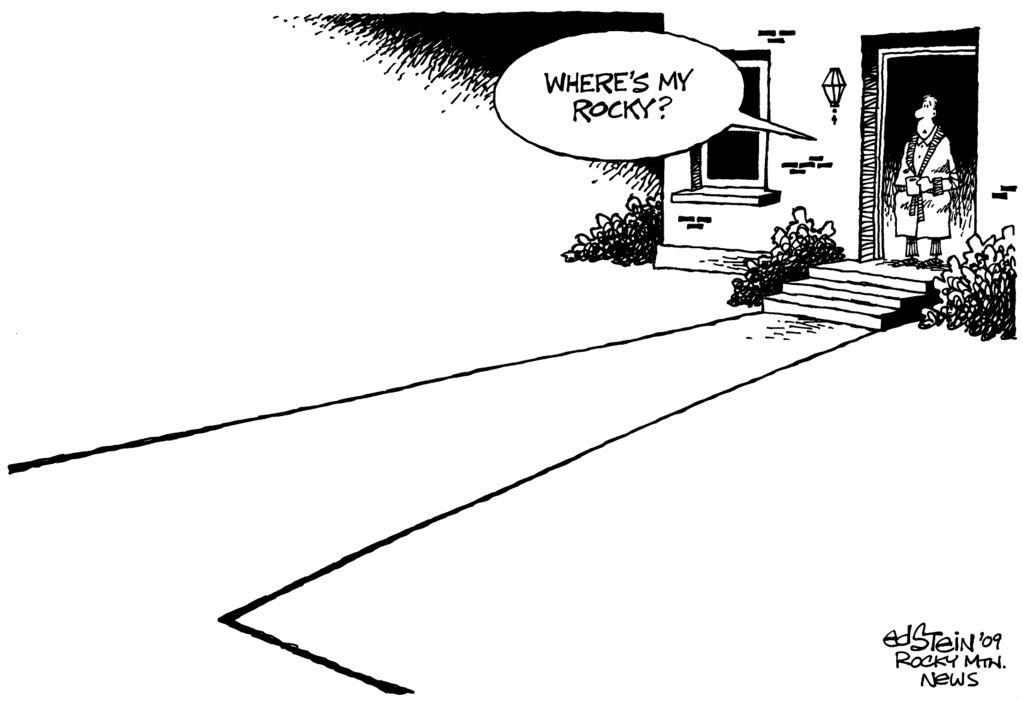
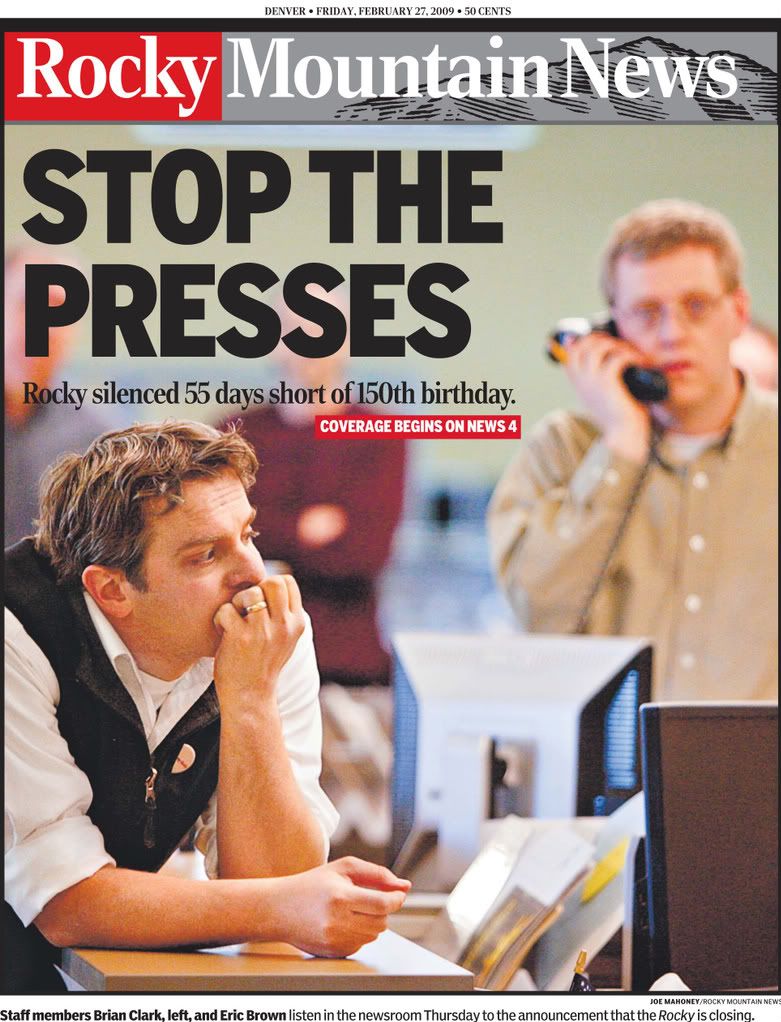
“In 2009 and 2010, all the two-newspaper markets will become one-newspaper markets, and you will start to see one-newspaper markets become no-newspaper markets,” said Mike Simonton, a senior director at Fitch Ratings, who analyzes the industry.
Many critics and competitors of newspapers — including online start-ups that have been hailed as the future of journalism — say that no one should welcome their demise.
“It would be a terrible thing for any city for the dominant paper to go under, because that’s who does the bulk of the serious reporting,” said Joel Kramer, former editor and publisher of The Star Tribune and now the editor and chief executive of MinnPost .com, an online news organization in Minneapolis.
“Places like us would spring up,” he said, “but they wouldn’t be nearly as big. We can tweak the papers and compete with them, but we can’t replace them.”
If the ideal of perpetual economic growth requires a perpetually frenzied consumerism, it is time to consider a different indicator of economic health. President Obama’s stimulus package is clearly based on this false ideal of perpetual economic growth. This ideal is embraced by the leaders of both political parties, even as the Republicans reject the specific means to that end. As the slurry of dollars begins to wash over us, many Americans are looking for a new direction. A return to the virtues of self-control and thrift would signal something really radical. So would a return to the idea of sustainability, a return to the belief that conserving for future generations is our first duty, and a recognition that putting aside idols is the first step to wisdom.
Oklahoma: 26.2 percent of households, 25.1 percent of adults
Utah: 25.5 percent of households, 23.9 percent of adults
Nebraska: 23.2 percent of households, 22.4 percent of adults
Arkansas: 22.6 percent of households, 21.2 percent of adults
Iowa: 22.2 percent of households, 18.9 percent of adults
Idaho: 22.1 percent of households, 21.3 percent of adults
Kentucky: 21.4 percent of households, 21.6 percent of adults
New Mexico: 21.1 percent of households, 20.5 percent of adults
Texas: 20.9 percent of households, 19.5 percent of adults
South Carolina: 20.6 percent of households, 19.2 percent of adults
Tennessee: 20.3 percent of households, 20.8 percent of adults
District of Columbia: 20.0 percent of households, 25.4 percent of adults
Mississippi: 19.1 percent of households, 20.3 percent of adults
Arizona: 18.9 percent of households, 17.1 percent of adults
Oregon: 17.7 percent of households, 18.1 percent of adults
Minnesota: 17.4 percent of households, 16.5 percent of adults
North Dakota: 16.9 percent of households, 18.1 percent of adults
Florida: 16.8 percent of households, 15.5 percent of adults
Kansas: 16.8 percent of households, 15.2 percent of adults
Colorado: 16.7 percent of households, 15.2 percent of adults
Georgia: 16.5 percent of households, 15.0 percent of adults
Illinois: 16.5 percent of households, 15.2 percent of adults
Michigan: 16.3 percent of households, 15.3 percent of adults
North Carolina: 16.3 percent of households, 14.8 percent of adults
Washington: 16.3 percent of households, 15.6 percent of adults
Wisconsin: 15.2 percent of households, 13.6 percent of adults
Louisiana: 15.0 percent of households, 13.8 percent of adults
Ohio: 14.0 percent of households, 13.1 percent of adults
Alabama: 13.9 percent of households, 12.2 percent of adults
Indiana: 13.8 percent of households, 13.0 percent of adults
Maine: 13.4 percent of households, 12.0 percent of adults
Alaska: 11.7 percent of households, 13.3 percent of adults
New Hampshire: 11.6 percent of households, 8.9 percent of adults
West Virginia: 11.6 percent of households, 10.6 percent of adults
New York: 11.4 percent of households, 10.6 percent of adults
Wyoming: 11.4 percent of households, 13.0 percent of adults
Maryland: 10.8 percent of households, 9.8 percent of adults
Nevada: 10.8 percent of households, 10.1 percent of adults
Pennsylvania: 10.8 percent of households, 9.2 percent of adults
Virginia: 10.8 percent of households, 10.0 percent of adults
Missouri: 9.9 percent of households, 8.4 percent of adults
Massachusetts: 9.3 percent of households, 8.4 percent of adults
Montana: 9.2 percent of households, 5.4 percent of adults
California: 9.0 percent of households, 8.4 percent of adults
Hawaii: 8.0 percent of households, 8.2 percent of adults
New Jersey: 8.0 percent of households, 6.1 percent of adults
Rhode Island: 7.9 percent of households, 5.3 percent of adults
South Dakota: 6.4 percent of households, 6.8 percent of adults
Delaware: 5.7 percent of households, 4.0 percent of adults
Connecticut: 5.6 percent of households, 4.8 percent of adults
Vermont: 5.1 percent of households, 4.6 percent of adults


RARE roast beef splashed with meaty jus, pork enrobed in luscious crackling fat, perhaps a juicy, plump chicken ... these are feasts that come to mind when one thinks of quintessential British food. Lately, however, a new meat is gracing the British table: squirrel.